
Ergonomics on the Move: Supporting Your Mobile Workforce
Today's mobile workforce finds itself working on public transport, in hotels, and in their cars, all of which lack ergonomic support. This post reveals the hidden costs of poor mobile ergonomics. It offers practical solutions to equip your teams' comfort, health, and productivity anywhere, extending...
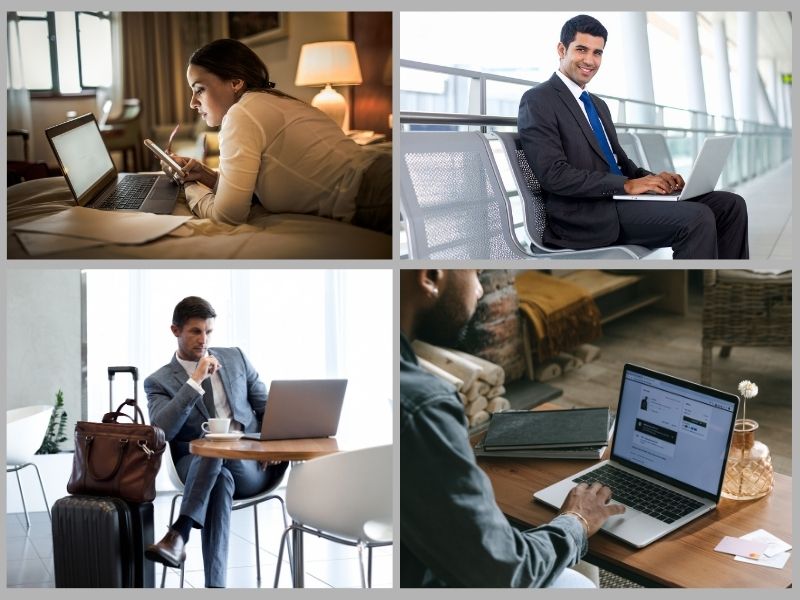
In today's hybrid work environment, employees are extending their work from the office or home, and some are working from hotel rooms, cars, coffee shops, airport lounges, and train stations. While you may have invested significantly in ergonomic office setups, these efforts can quickly unravel when your team is on the move.
The hidden costs of working on the go
Consider this: after a long drive to a client meeting, your employee arrives feeling stiffness in their joints. Or picture a team member spending hours hunched over a laptop in a stylish but uncomfortable lobby chair, feeling increased tenseness in their shoulders. These scenarios are uncomfortable and productivity dampeners that can lead to long-term health issues.
The reality is that even the most comprehensive ergonomic program falls short if it only addresses fixed workspaces. When employees travel, they're forced into environments designed for aesthetics or short-term use, not sustained productivity.
Understanding the risks
Poor posture remains one of the primary causes of workplace discomfort, and the problem intensifies in mobile work settings. Those elegant tub chairs in waiting areas? They encourage slouched backs and stiff shoulders. Hotel room desks are often too high or too low. Train station cafés offer cramped tables that force workers to hunch over their devices.
The cumulative effect of these poorly designed temporary workspaces can include:
- Neck and shoulder strain from incorrect screen positioning
- Lower back pain from inadequate lumbar support
- Wrist and forearm discomfort from awkward keyboard angles
- Reduced circulation from improper seating
- Decreased productivity and focus due to physical discomfort
.png)
Practical solutions for every location
The good news? Supporting your mobile workforce doesn't require expensive overhauls or bulky equipment. Small, portable ergonomic solutions can transform any space into a comfortable, productive workspace.
Vehicle-based work
When employees need to work from their cars between client meetings or during field assignments, the challenge is maximising limited space while maintaining proper posture. Equipping your travelling employees with portable ergonomic tools can make a significant difference:
Recommended solutions:
- Portable lap desks with built-in support for stable surfaces
- Compact laptop trays to prevent hunching
- Hands-free headsets and voice-activated tools for safe, efficient task completion
- Document holders to reduce neck strain
Transport hubs and public spaces
Waiting rooms, airport lounges and train stations present unique challenges: crowded conditions, limited seating options, and furniture designed for waiting, not working.
Recommended solutions:
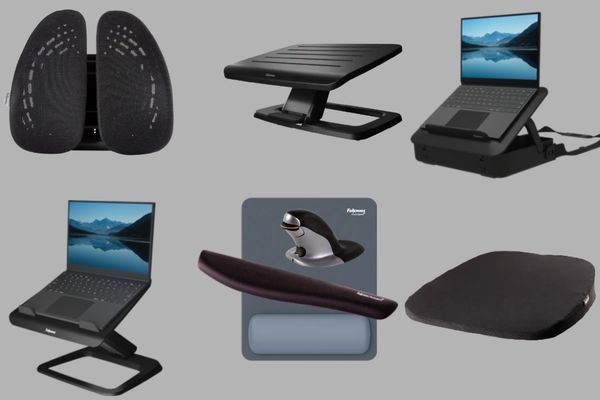
- Compact, rollable keyboards and mice for natural wrist positioning
- Portable seat cushions and inflatable lumbar supports
- Lightweight footrests to improve circulation and reduce leg discomfort
Hotel workspaces
Hotel furniture is designed for short stays, not extended work sessions.
Recommended solutions:
- Compact, adjustable laptop stands that elevate screens to eye level
- Foldable or inflatable lumbar supports for additional back comfort
- Portable seat cushions that fit easily into overnight bags
These lightweight solutions are non-invasive and easy to implement, allowing employees to quickly optimise working on public transport, in any lobby, hotel room, or lounge area.
Building a mobile ergonomics programme
At Aston & James, we understand that comprehensive employee wellbeing extends beyond the traditional office. We can help you develop a mobile ergonomics programme that includes:
- Assessment: Identify which employees work remotely most frequently and their typical mobile work scenarios
- Equipment selection: Choose portable ergonomic solutions that align with your team's needs and travel patterns
- Travel kits: Create standardised ergonomic travel kits that employees can easily pack and use
- Training: Provide guidance on setting up ergonomic workspaces in various environments
- Ongoing support: Regular check-ins to ensure solutions are being used effectively
A commitment to employee wellbeing
A lack of space shouldn't mean sacrificing comfort, productivity, or long-term health. By extending your ergonomic considerations beyond fixed workspaces, you demonstrate a commitment to employee wellbeing that pays dividends in reduced discomfort, increased productivity, and improved job satisfaction.
Good ergonomics doesn't end at the office door—it extends into every space where work happens. Let Aston & James help you ensure your mobile workforce has the tools they need to stay comfortable, healthy, and productive, wherever their work takes them.
In today's hybrid work environment, employees are extending their work from the office or home, and some are working from hotel rooms, cars, coffee shops, airport lounges, and train stations. While you may have invested significantly in ergonomic office setups, these efforts can quickly unravel when your team is on the move.
The hidden costs of working on the go
Consider this: after a long drive to a client meeting, your employee arrives feeling stiffness in their joints. Or picture a team member spending hours hunched over a laptop in a stylish but uncomfortable lobby chair, feeling increased tenseness in their shoulders. These scenarios are uncomfortable and productivity dampeners that can lead to long-term health issues.
The reality is that even the most comprehensive ergonomic program falls short if it only addresses fixed workspaces. When employees travel, they're forced into environments designed for aesthetics or short-term use, not sustained productivity.
Understanding the risks
Poor posture remains one of the primary causes of workplace discomfort, and the problem intensifies in mobile work settings. Those elegant tub chairs in waiting areas? They encourage slouched backs and stiff shoulders. Hotel room desks are often too high or too low. Train station cafés offer cramped tables that force workers to hunch over their devices.
The cumulative effect of these poorly designed temporary workspaces can include:
- Neck and shoulder strain from incorrect screen positioning
- Lower back pain from inadequate lumbar support
- Wrist and forearm discomfort from awkward keyboard angles
- Reduced circulation from improper seating
- Decreased productivity and focus due to physical discomfort
Practical solutions for every location
The good news? Supporting your mobile workforce doesn't require expensive overhauls or bulky equipment. Small, portable ergonomic solutions can transform any space into a comfortable, productive workspace.
Vehicle-based work
When employees need to work from their cars between client meetings or during field assignments, the challenge is maximising limited space while maintaining proper posture. Equipping your travelling employees with portable ergonomic tools can make a significant difference:
Recommended solutions:
- Portable lap desks with built-in support for stable surfaces
- Compact laptop trays to prevent hunching
- Hands-free headsets and voice-activated tools for safe, efficient task completion
- Document holders to reduce neck strain
Transport hubs and public spaces
Waiting rooms, airport lounges and train stations present unique challenges: crowded conditions, limited seating options, and furniture designed for waiting, not working.
Recommended solutions:
- Compact, rollable keyboards and mice for natural wrist positioning
- Portable seat cushions and inflatable lumbar supports
- Lightweight footrests to improve circulation and reduce leg discomfort
Hotel workspaces
Hotel furniture is designed for short stays, not extended work sessions.
Recommended solutions:
- Compact, adjustable laptop stands that elevate screens to eye level
- Foldable or inflatable lumbar supports for additional back comfort
- Portable seat cushions that fit easily into overnight bags
These lightweight solutions are non-invasive and easy to implement, allowing employees to quickly optimise working on public transport, in any lobby, hotel room, or lounge area.
Building a mobile ergonomics programme
At Aston & James, we understand that comprehensive employee wellbeing extends beyond the traditional office. We can help you develop a mobile ergonomics programme that includes:
- Assessment: Identify which employees work remotely most frequently and their typical mobile work scenarios
- Equipment selection: Choose portable ergonomic solutions that align with your team's needs and travel patterns
- Travel kits: Create standardised ergonomic travel kits that employees can easily pack and use
- Training: Provide guidance on setting up ergonomic workspaces in various environments
- Ongoing support: Regular check-ins to ensure solutions are being used effectively
A commitment to employee wellbeing
A lack of space shouldn't mean sacrificing comfort, productivity, or long-term health. By extending your ergonomic considerations beyond fixed workspaces, you demonstrate a commitment to employee wellbeing that pays dividends in reduced discomfort, increased productivity, and improved job satisfaction.
Good ergonomics doesn't end at the office door—it extends into every space where work happens. Let Aston & James help you ensure your mobile workforce has the tools they need to stay comfortable, healthy, and productive, wherever their work takes them.
